
In the past two months alone, four companies have garnered a cumulative Rs 22,400 crore via this route.

'Consider 40% to 50% in equities, 10% in gold as a hedge, and the remaining 30% to 40% split between multi-asset funds and hybrid funds.'

Ask rediffGURU and PF expert Nitin Narkhede your mutual fund and personal finance-related questions.

Experts say, investors will be better off exiting them at higher levels and investing in stocks of fundamentally sound companies.

Titan posted better than expected revenue growth in the March quarter of the financial year 2022-23 (Q4FY23), powered by strong demand trends in the jewellery and watch segment. Standalone jewellery sales for the firm were up 24 per cent year-on-year (YoY) on a slightly lower base and aided by like-to-like growth of 19 per cent. The company highlighted that new buyer growth was at 15 per cent while average ticket size was up 8 per cent.

Omkeshwar Singh, Head, Rank MF, a mutual fund investment platform, answers your queries.

Select companies in infra, capital goods, private banks, auto, oil & gas, and mining could be considered by investors.

Omkeshwar Singh, Head, Rank MF, a mutual fund investment platform, will answer your queries.

Swift gains on Dalal Street this year have also led to a sharp surge in shares of equity market intermediaries like depositories, exchanges, and registrar and transfer Agents (RTAs). The stock prices of BSE, CDSL, CAMS, and KFin Technologies are up 24-283 per cent so far in 2023 when compared to a 9 per cent rise in the benchmark Nifty index. With the market buoyancy expected to keep up the pace, analysts believe these stocks are a good long-term bet despite the sharp rally, which can trigger an intermittent correction.

After a turnaround in performance by Indian equity markets since July that has seen the S&P BSE Sensex and the Nifty50 wipe out the year-to-date losses, analysts suggest investors start nibbling into stocks that are focused on the domestic economy. While they say intermittent corrections, led by policies of global central banks and other economic data, cannot be ruled out, analysts expect India's relative outperformance among global equity markets to continue as it looks better placed with a healthy economic recovery, and remains one of the fastest growing major economies. In this backdrop, Neeraj Chadawar, head of quantitative equity strategy at Axis Securities, believes that amid global slowdown, aggressive tightening by the central banks, and preference for domestic interests first (by the local government), export-oriented themes are likely to be muted or will deliver conservative returns in the near-term.

Omkeshwar Singh, head, Rank MF, a mutual fund investment platform, answers your queries.

Axis Bank's acquisition of Citibank's consumer finance business for Rs 12,325 crore - the second biggest deal in the Indian banking sector - is seen as a good deal at a good price. The acquisition enables Axis Bank to close the gap with competition in some key segments such as credit cards. At the same time, there are some key issues that are crucial for the deal's success, apart from the fact that it will take some time for Axis to reap the full harvest of its investment.

Ulhas Joshi, Head -- Sales, Rank MF, a mutual fund investment platform, answers your queries.

Ulhas Joshi, Head -- Sales, Rank MF, a mutual fund investment platform, answers your queries.

Portfolio management services (PMS), catering to higher networth individuals (HNIs), are facing tough competition from emerging alternative investment funds (AIFs), evident from their dwindling client base. In May, the number of clients for the industry stood at 125,390, down 20,528 in two months, shows data from the Securities and Exchange Board of India (Sebi). "PMS managers also have a high active ratio, which means their portfolios are quite differently positioned and more actively managed, compared to the benchmark, which is also a highlight for long-term investors.
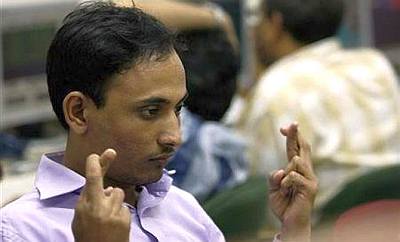
Investors remain cautious ahead of F&O expiry.

tailwinds of a remarkable year and handsome investor returns, Indian equities are set for an eventful journey in 2024, with a slew of local and global cues -- varying from interest rates to Lok Sabha polls to geopolitical happenings. Analysts are of the view that the bull run in the domestic equity market will continue, and over the next 3-6 months, the benchmark indices -- Sensex and Nifty -- could climb up to 7 per cent. In 2023, the 30-share BSE Sensex jumped 11,399.52 points or 18.73 per cent, and the NSE Nifty climbed 3,626.1 points or 20 per cent.

FIIs are looking at the long-term story and initiatives of Indian pharma companies to transform themselves into global entities.

The progress of the GST Bill in Parliament is also likely to remain in focus

Market sentiment around the stock has continued to be positive on the back of improving outlook for the US economy and anticipated weakness in the rupee.

A section of analysts feel now may not be a bad time to buy select PSBs.

The 30-share Sensex provisionally ended up 366 points at 27,275 and the 50-share Nifty ended up 132 points at 8,235.

Omkeshwar Singh, head, Rank MF, a mutual fund investment platform, answers your queries.

Omkeshwar Singh, Head, Rank MF, a mutual fund investment platform, answers your queries.

Zomato's initial public offer (IPO) is scheduled to open for subscription on July 14 and is priced between Rs 72 - 74 per share. At the upper end of the price band of the offering, the company aims to raise Rs 9,350 crore. Most analysts have given a 'subscribe' rating to the issue for listing gains.

Hike in planned public-sector capital expenditure will be credit-positive for infra cos
Omkeshwar Singh, Head, Rank MF, a mutual fund investment platform, answers your queries.

Despite unprecedented levels of uncertainty in Samvat 2077, investors have little to complain about on the returns front. The BSE Sensex delivered returns of 38 per cent in this period, while the Nifty registered a return of over 40 per cent. As is the case in bull markets, companies in the small- and mid-capitalisation basket outperformed the benchmarks, with returns almost twice those of frontliners.

Geopolitical concerns, earnings sees investors rush to safe haven plays post the Union Budget presentation in July.

But experts say downside limited, pockets of opportunities for investors

Move can also bring a huge change in the way business is done in India, where firms use multiple current accounts, often for even individual projects, making them difficult to monitor.

The earnings are, however, expected to be down around 2 per cent on a sequential basis due to pent-up demand getting exhausted and the adverse impact of rising metals and energy prices on consumer goods and manufacturing companies.

The BSE Mid-and Small-cap indices outperformed their larger peers rising 72 per cent and 52 per cent, respectively, during Samvat 2070.

'The correction could take two to three months and traders need to be careful.' 'For investors, this could be a good time to nibble in.'

Raamdeo Agrawal says, an investor should figure out if the company actually makes money or not, making an investment comes later.

Mid-caps in cyclical sectors such as cement, financials and capital goods estimated to earn much more

Patience can be rewarding. 'Post-listing, sanity often returns to valuations of newly-listed businesses within six to nine months. Buy then.'

The companies that have seen sharp erosion of market wealth include YES Bank, Indiabulls Housing Finance, Zee Entertainment, Vodafone Idea, and Bharat Heavy Electricals.

Omkeshwar Singh, Head, Rank MF, a mutual fund investment platform, answers your queries.

A strong performance by sectors including banking raised the profits of Indian companies by 28 per cent in the three months ended March 2022. The rate of growth is, however, lower than the 30 per cent seen in December. Growth in net sales was also lower than what was seen in the December quarter for the sample under consideration.
 © 2026 Rediff.com - Advertise with us - Disclaimer - Privacy Policy - Sitemap - Feedback - About us - Terms of use - Grievances